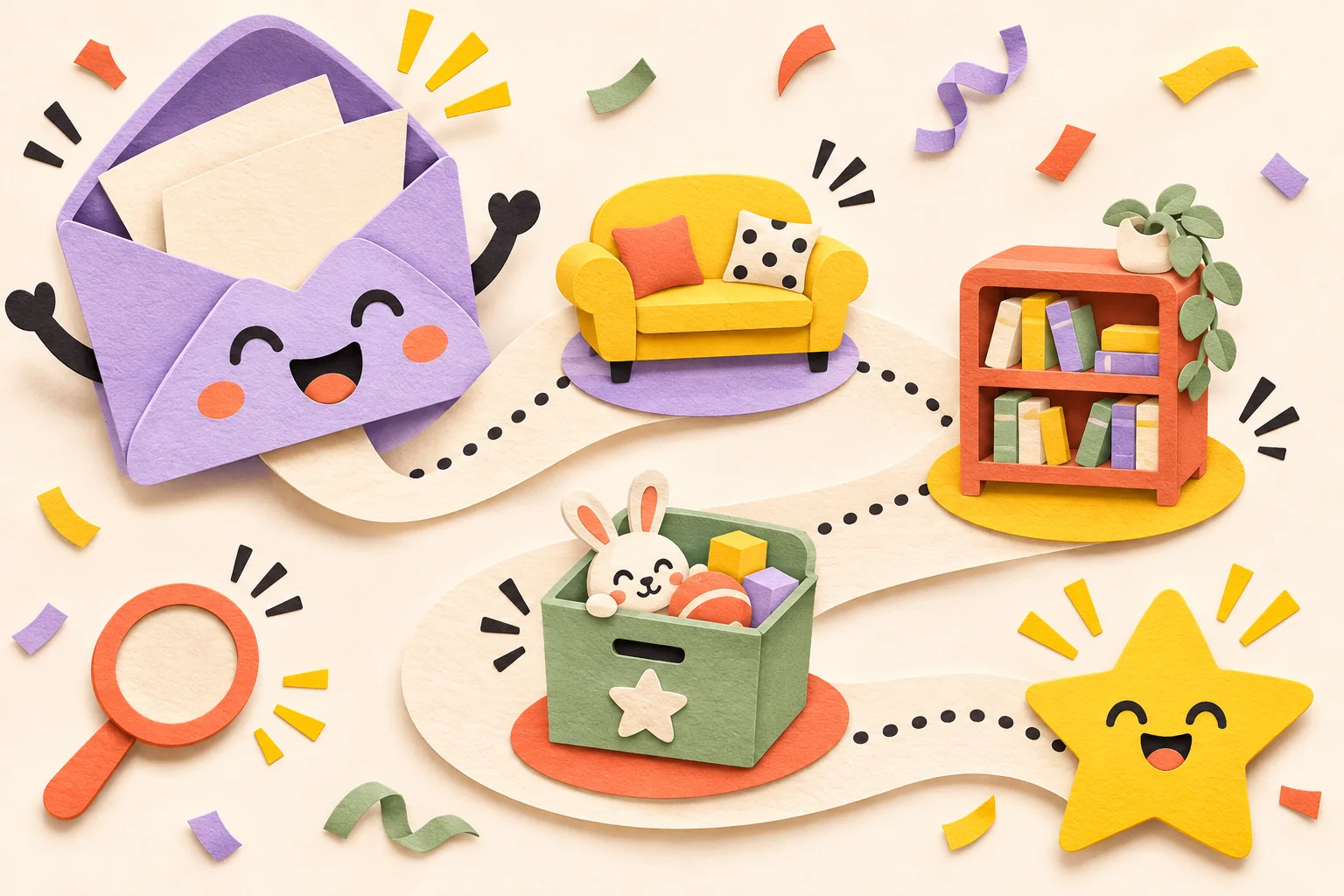
A good scavenger hunt clue sends players to one clear place. Pick the places first, write one short clue for each, and put every card where the previous clue leads. Hand the first card to the players and put the finish message at the final answer spot. The five-card example below includes both the words to copy and the placement order.
Start with a clue style the group can read
Think about the answer before you write the riddle. A chair is easy to describe, but a room full of chairs can make it a poor answer. Mark one with a paper triangle or name the one by the table. Use an ordinary action children recognize, such as sitting, reading, or putting on shoes. Add a second detail only when it makes the answer clearer.
| Style | Player clue | What makes it work |
|---|---|---|
| Picture clue | A drawing of a chair with a triangle on it | Newer readers can match two features |
| Plain clue | Find the chair with the paper triangle | One instruction with a visible marker |
| Short riddle | I have pages and a cover. Find me on the table. | Familiar description and a limited area |
| Word clue | Put these letters in order: K O O B. Look for your answer on the table. | A small letter task with a location hint |
For a word clue with more than one possible answer, add a clue to the meaning. A rhyme can make a card fun, but the wording still needs to point somewhere specific.
Copy this five-card indoor trail
Suggested ages: 6–10, with a reader available. Estimated time: 5–10 minutes for adult setup, 10–18 minutes to play. Set a chair with a paper triangle, one book on an open shelf or table, a paper shoe near the entryway within easy reach, a pillow with a paper star, and an empty cup with a paper dot on the table. The markers distinguish the props from similar objects. If a spot is out of reach for a player, move the prop to a reachable surface before writing the card.
- Card 1: “Find the seat with a paper triangle.”
- Card 2: “I have a cover and pages. Find the book we put out for this game.”
- Card 3: “Find a paper shoe near the place where we get ready to go out.”
- Card 4: “Find a soft pillow wearing a paper star.”
- Card 5: “Find the cup on the table that has a paper dot.”
Write the card numbers on the backs so the adult can reset the trail. A finish note can say, “You followed the whole trail. Pick someone to make the next clue.”
Use this placement key to keep the trail in order
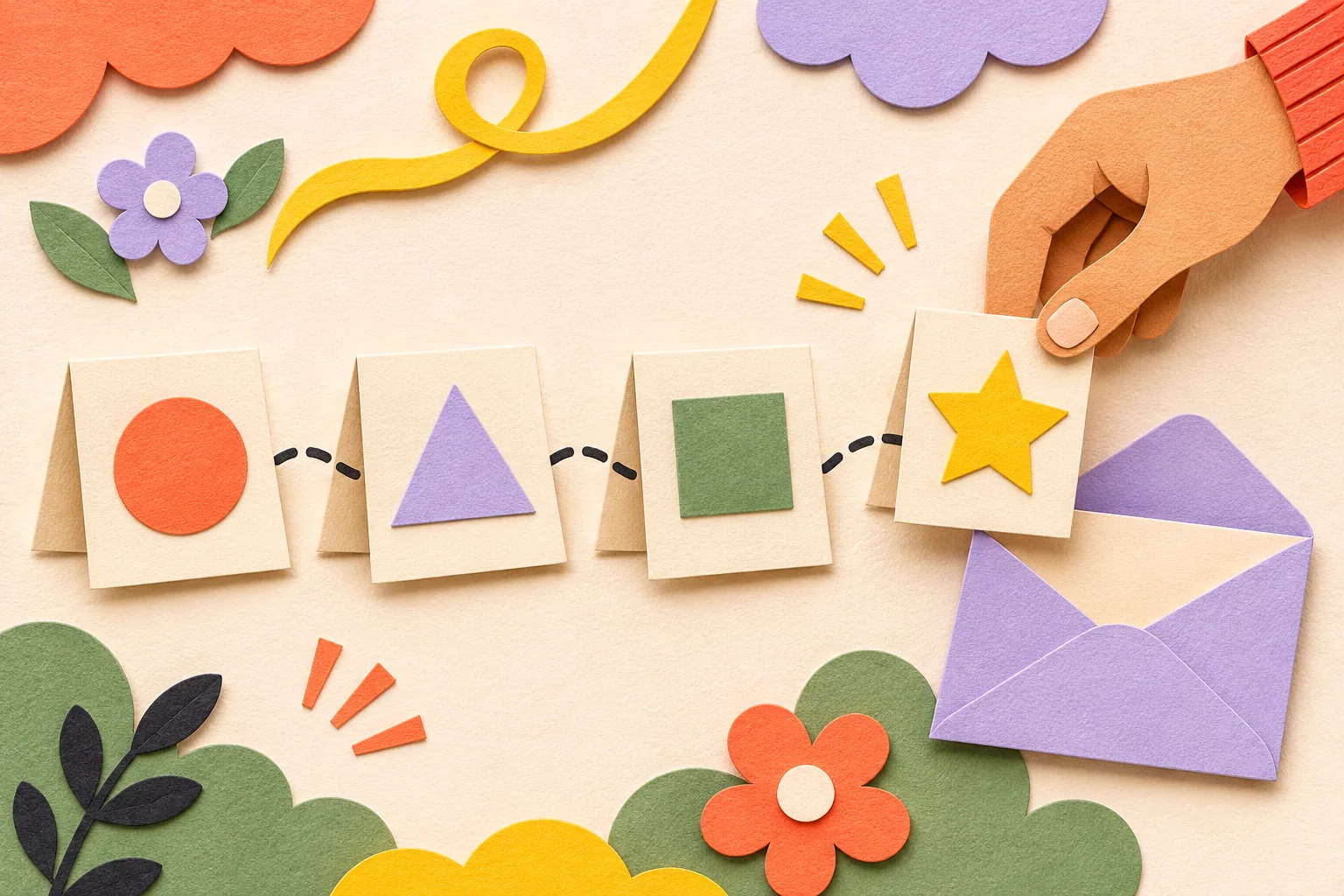
Think of each answer as the place the next card waits. If Card 1 says “chair,” Card 2 goes beside the triangle on the chair. The following list is for the adult:
- Hand out Card 1. Its answer is the marked chair. Put Card 2 there.
- At the chair, Card 2 points to the book. Put Card 3 next to the book.
- At the book, Card 3 points to the paper shoe. Put Card 4 next to the paper shoe.
- At the paper shoe, Card 4 points to the star pillow. Put Card 5 beside the pillow.
- At the pillow, Card 5 points to the dotted cup. Put the finish note beside the cup.
If you want a later card to stay secret, put it in an envelope with the number on the outside. Start the group together. The adult can give players the envelopes in order at the table if walking the route isn't a good fit.
Give a stuck player one more useful detail
Try reading each clue without looking at the setup notes. If a plausible answer would lead you to the wrong place, revise the clue. “Find the thing with legs” could point to a chair, table, or toy. “Find the seat with the triangle” gives the player an action and a visible check. For a riddle about a book, place one book on its own and mention the surface you chose. Use the most specific detail in the hint if you want the first reading to be a little harder.
Write the backup hint while you are setting up. For Card 3, try “The shoe is made from paper, and it's on the shelf by the entry.” For Card 5, “Check the outside of the cup for a paper circle.” If someone solves the clue from the hint, celebrate the answer and move on. A clear hint keeps the rest of the trail available.
Set clues where players can see and reach them
Place cards beside or on top of props at a reachable height. Skip appliances, high shelves, closed drawers, stairs, and places where children would have to move furniture or open an outside door. In the sample trail, the paper shoe can sit on a table close to the entryway. It doesn't need to be on the floor. Keep the route in a space the adult can see. A loose card on an open surface is enough to make the find satisfying.
If the group includes a newer reader, take turns with the same jobs. One child can read or listen to the clue, another can point to the target, and another can hand the card to the group. Print in a large, clear type size. Give color clues a shape or a word as well, so the trail still works on a black-and-white printer.
Walk the trail once before handing out Card 1
- Choose reachable places and set out the markers.
- Write the answer next to each clue on a separate adult sheet.
- Put the next card at the previous card's answer spot.
- Walk the route in order and keep one hint for each card.
- Put a finish note at the last spot and hand Card 1 to the players.
Use the Treasure Hunt Maker when you want to adapt the route to your own space. If you have no time to hide cards, the indoor scavenger hunt guide has a one-room checklist and a seated version.
Quick questions
Where should the first scavenger hunt clue go?
Give it to the players. Its answer tells them where to find the second clue, so they know when the game starts.
Should all of my scavenger hunt clues rhyme?
Rhyming is optional. Use a plain sentence if a rhyme makes the object or location harder to recognize.
How many clues are enough?
Try four to six cards for a short trail. Reduce the number if you have a small space or the group needs time to read each one aloud.
How can I make my clues harder for older kids?
Add a short word or number puzzle to one card. Check that it has one intended answer and leave a separate hint for the adult.
Ready for the fun part?
Make a clue trail that fits your home, or pick a free printable adventure.
Make a treasure hunt